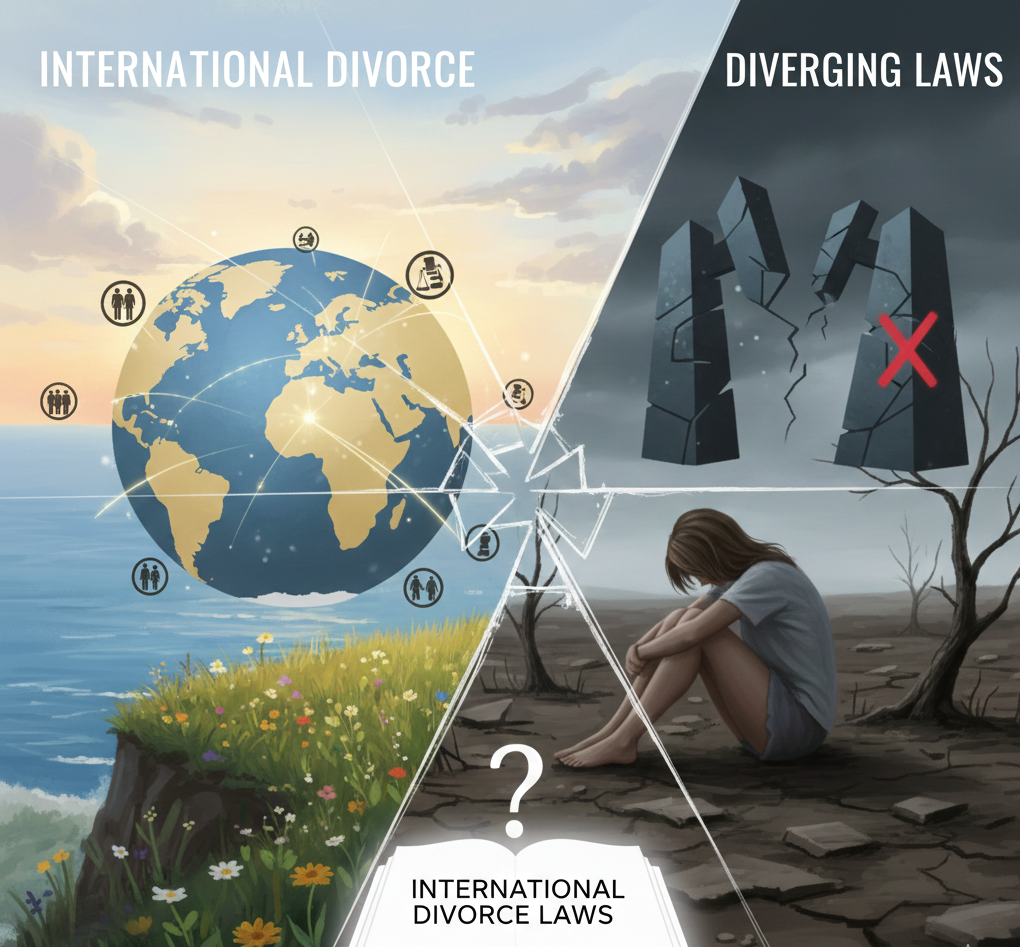
Divorce is tough enough when it’s just you and your spouse in the same town. But when countries, cultures, and legal systems get involved, it can feel like the ground is shifting under your feet. If you’re in the USA or Europe, dealing with an international divorce might mean navigating different rules, time zones, and even languages. I’ve seen friends go through this— the stress of figuring out where to file, who gets the kids, and how to split the house in one country while dealing with a bank account in another. It’s heartbreaking, but you’re not alone. This article breaks it down step by step, with real talk on the emotional rollercoaster, the legal hurdles, and ways to come out stronger.
What Makes a Divorce “International”?
Picture this: You met your partner while studying abroad, got married in Paris, bought a home in California, and now have kids with dual citizenship. Sounds romantic until things fall apart. An international divorce happens when spouses have ties to more than one country—through citizenship, residency, property, or even where the marriage took place. It’s not just about ending the marriage; it’s about untangling lives spread across borders.
For folks in the USA, this often means one spouse living overseas or assets scattered globally. In Europe, EU rules can simplify or complicate things depending on the countries involved. The key? It ramps up the complexity, but understanding the basics can ease the pain.
The Emotional Weight of It All
Let’s be real—divorce hurts. Add an international twist, and the loneliness can hit harder. You might feel isolated, far from family support in your home country. One woman I know, an American in London, described it as “grieving a life while fighting a war across oceans.” The uncertainty of where you’ll live or see your kids can trigger anxiety, depression, or anger.
But balance that with this: Many people emerge more resilient. Therapy helps. Support groups for expats or international families exist online and in cities like New York or Berlin. It’s okay to lean on friends, even if they’re an ocean away. Remember, emotions ebb and flow; give yourself grace.
Legal Basics: Jurisdiction and Where to Start
First things first: Where do you file? Jurisdiction is the legal term for which court has the right to hear your case. It depends on where you live, your nationality, or where your assets are. Get this wrong, and you could end up with conflicting rulings from two countries.
In the USA, divorce is handled at the state level. You usually need to reside in a state for a certain period— like six months in California or a year in New York—before filing. If you’re abroad, you can still file in the US if you meet residency rules or if your spouse agrees. But if your partner is in another country, serving papers involves international treaties like the Hague Convention.
Europe has its own playbook. The EU’s Rome III Regulation lets couples in participating countries (like Germany, France, or Spain) choose which law applies to their divorce. If no choice is made, it’s based on habitual residence—where you’ve lived with intent to stay. This covers 17 EU states, making things more uniform, but the UK post-Brexit follows its own rules.
For US-Europe mixes, it’s trickier. A US citizen divorcing in France might need to enforce the judgment back home, which requires US courts to recognize it under state laws. Always consult a lawyer specializing in international family law early on.
Divorce Processes in the USA
In America, divorces are no-fault in most states, meaning you don’t have to prove wrongdoing—just that the marriage is irretrievably broken. Processes vary: California uses community property (50/50 split), while New York goes for equitable distribution (what’s fair).
If you’re overseas, file in your last US state of residence or where your spouse lives. Military families have special rules under the Servicemembers Civil Relief Act. Expect paperwork, mediation, and possibly court hearings. Costs? From $10,000 to $50,000 or more with international elements.
One relatable story: An expat in Italy filing in Texas had to deal with time differences for virtual hearings. It was exhausting, but she felt empowered taking control.
Divorce Processes in Europe
Europe’s approach emphasizes agreement where possible. In EU countries under Rome III, you can pick the law of your nationality or residence. For example, a German-Italian couple could choose German law for a quicker process.
No-fault divorce is common, but waiting periods vary—six months in France, none in Sweden. The Brussels IIb Regulation helps recognize divorces across EU states without extra steps. Outside the EU, like in Switzerland, it’s based on residency.
For Europeans in the US, recognition is key. A Spanish divorce might need validation in a US court for asset division.
Financial Aspects: Splitting Assets Across Borders
Money matters can break your heart all over again. International divorces involve currency exchanges, taxes, and hidden assets. In the USA, courts divide marital property fairly, but overseas assets might require foreign experts.
In Europe, community property is common in places like France, while the UK focuses on needs and contributions. Pensions, stocks, and real estate abroad add layers—think capital gains tax in the US or VAT in Europe.
Spousal support (alimony) differs too. US courts consider income and lifestyle; European ones might limit it to a few years. Enforce it via treaties, but delays happen. Practical tip: Track all finances early, use forensic accountants if suspicion arises. One couple I heard about lost thousands in overlooked overseas investments.
Child Custody and Family Dynamics
Nothing tugs at the heart like kids in the mix. International custody battles can feel like a nightmare, with fears of abduction or restricted travel. The Hague Convention on Child Abduction helps return kids to their habitual residence, but not all countries follow it.
In the USA, courts prioritize the child’s best interests under state laws like the Uniform Child Custody Jurisdiction Act. Joint custody is common, but if one parent is abroad, visitation might involve flights and schedules.
Europe follows similar “best interests” rules, with EU regulations aiding cross-border enforcement. In 2026, updates to the 1996 Hague Convention promise faster custody order enforcement and better abduction protections.
Family impact? Kids might struggle with divided loyalties or cultural shifts. Co-parenting apps help, and counseling is crucial. A European mom in the US shared how video calls kept her bond strong with her son in Germany.
Social and Cultural Challenges
Society’s view on divorce varies. In the USA, it’s more accepted, with support networks everywhere. Europe differs—more stigma in southern countries like Italy, less in Scandinavia.
For internationals, cultural clashes arise. A US-European marriage might face differing expectations on gender roles or family involvement. Socially, you might lose friends or face judgment. But new communities await—expat groups in cities like Paris or Chicago offer solidarity.
Relatable? Think of relocating post-divorce, rebuilding social circles. It’s lonely, but many find deeper connections.
Practical Tips for Navigating It
Start with a good lawyer— one versed in international law. In the US, look for board-certified family attorneys; in Europe, solicitors with EU expertise.
Gather documents: Marriage certificate, passports, financial statements. Translate if needed. Consider mediation to avoid court drama—it’s cheaper and less adversarial.
Budget for extras: Travel, translations, multiple legal fees. Protect yourself emotionally—journal, exercise, seek therapy. For 2026 changes, note faster digital processes for cross-border cases.
Looking Ahead: Hope and Strength
Divorce, especially international, tests your limits. It can leave scars—financial setbacks, emotional wounds, family strains. But here’s the truth: Many rebuild beautifully. You learn independence, gain clarity on what you want, and often find love again.
Take Sarah, an American in Spain: After a messy divorce, she started a business helping expats, found peace in her new life. Or Mark in the UK, who co-parents successfully across the Atlantic, watching his kids thrive.
You’re stronger than you know. Seek support, plan carefully, and trust the process. A brighter chapter awaits—one of growth, freedom, and new beginnings.